A custom CRM with AI agents inside
The CRM we use every day at FT Mercati: an assistant that carries out operations, plain-language filters, AI checks on quotes and contracts.
Case study
An AI adviser for senior management: it reasons on the organisation chart, strategic plan and company know-how, alongside FT Mercati market data.
In brief
FT CEO is our assistant for the people who run a company: an AI adviser that reasons on the real context of the business (organisation chart, vision, SWOT analysis, objectives, responsibilities) rather than on generic advice. Today it is a working prototype. The direction of development is to combine company know-how with FT Mercati's market data and fundamental data, to support decisions on purchasing, prices and strategy.
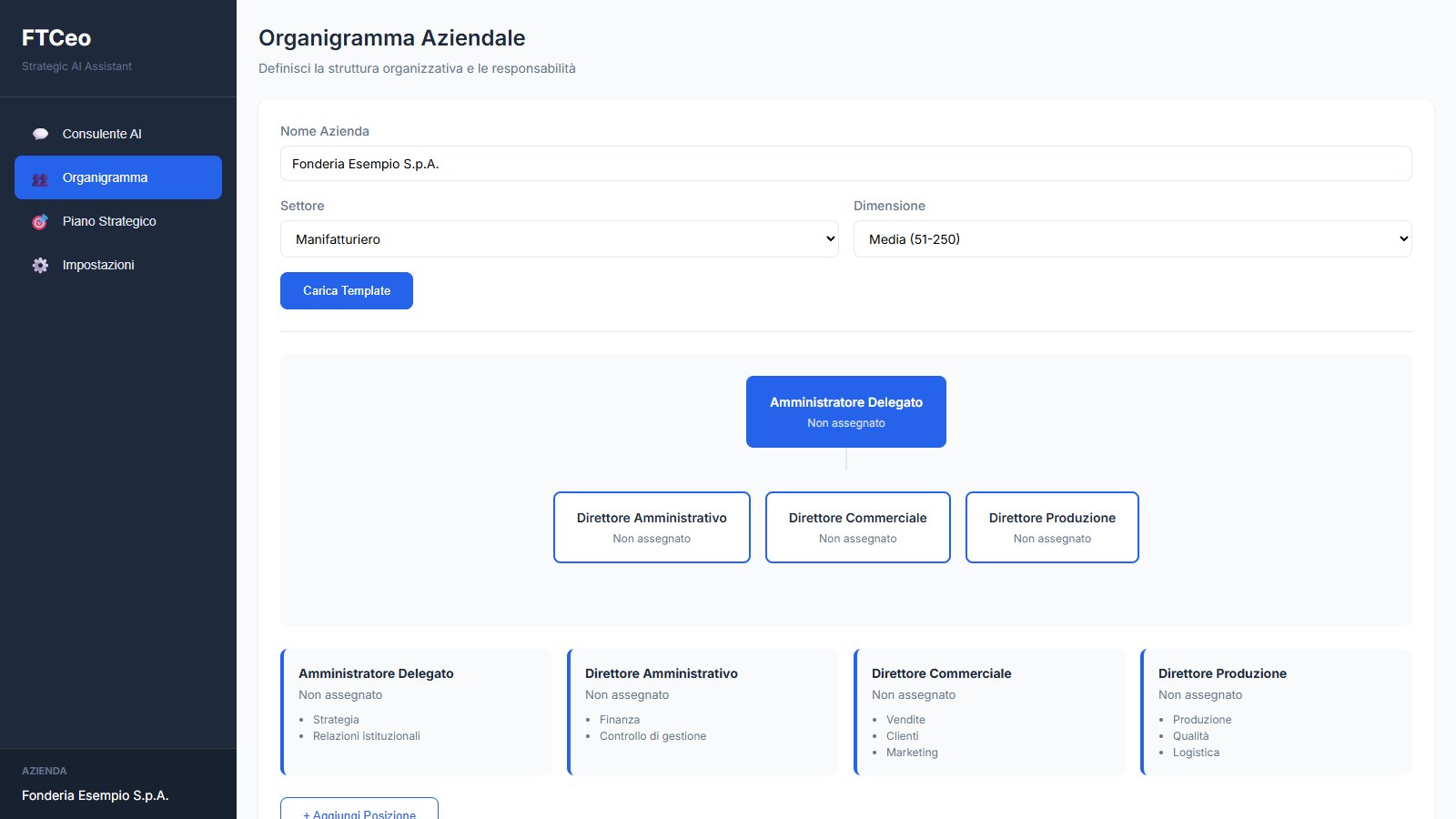
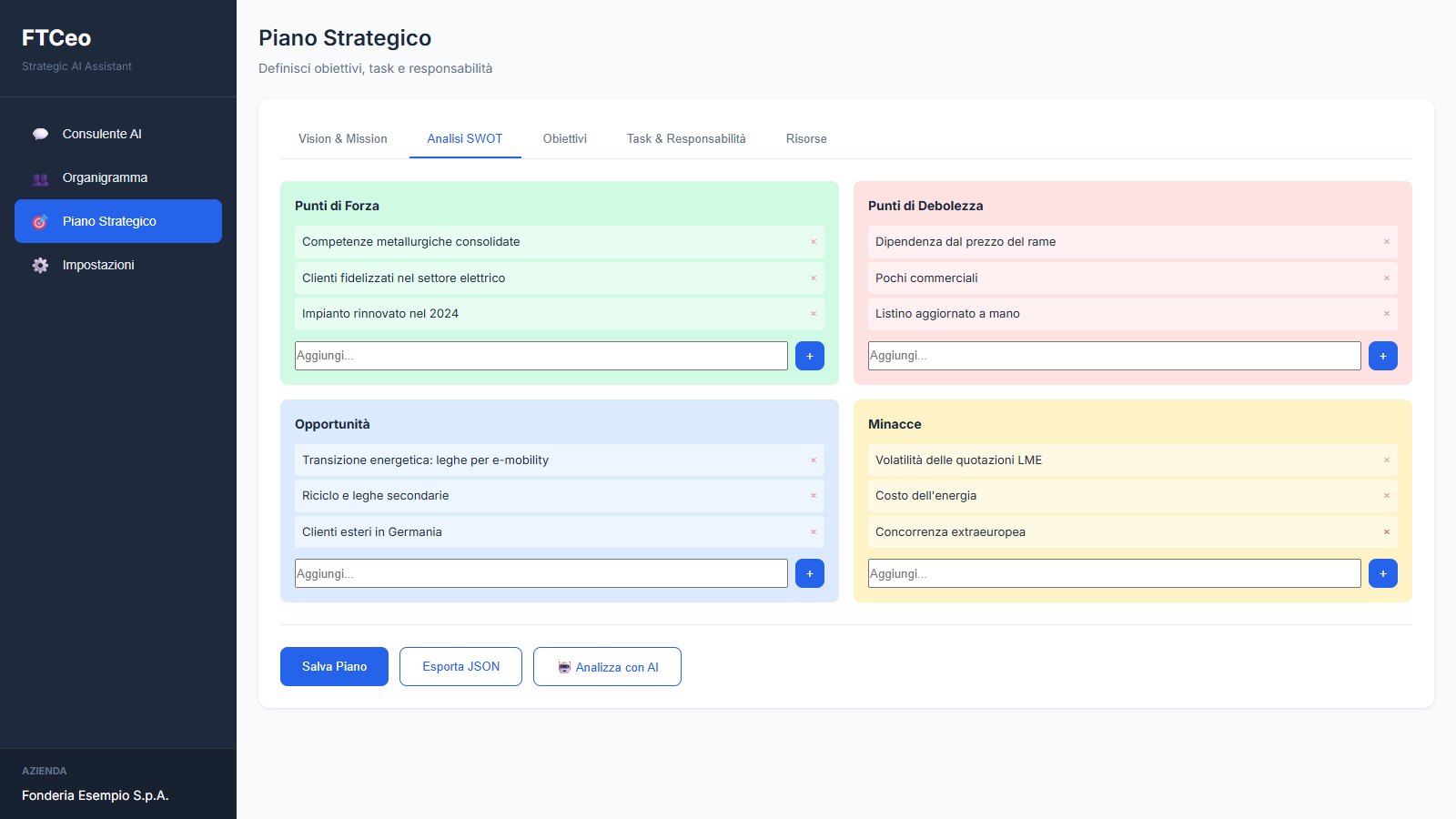
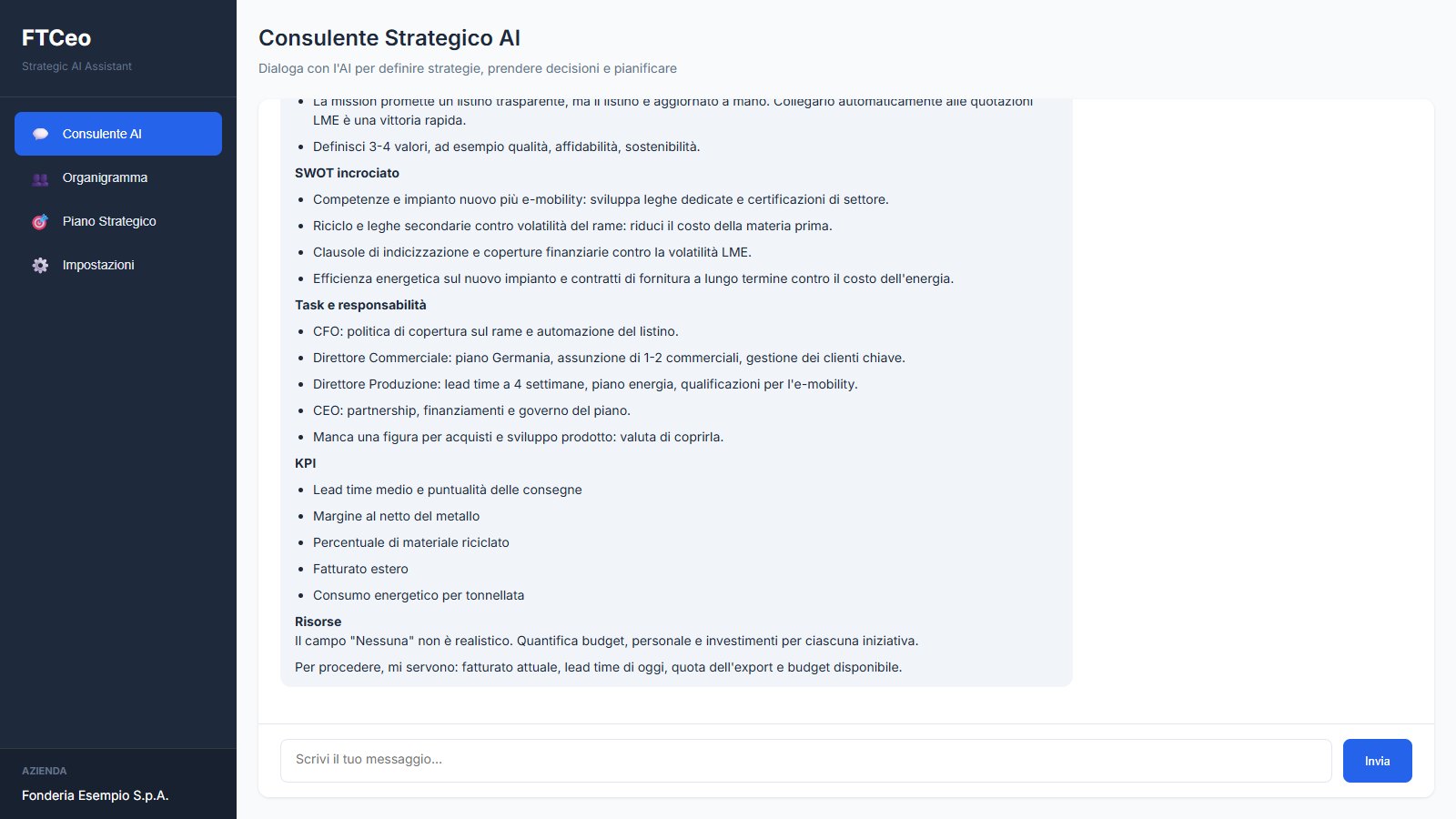
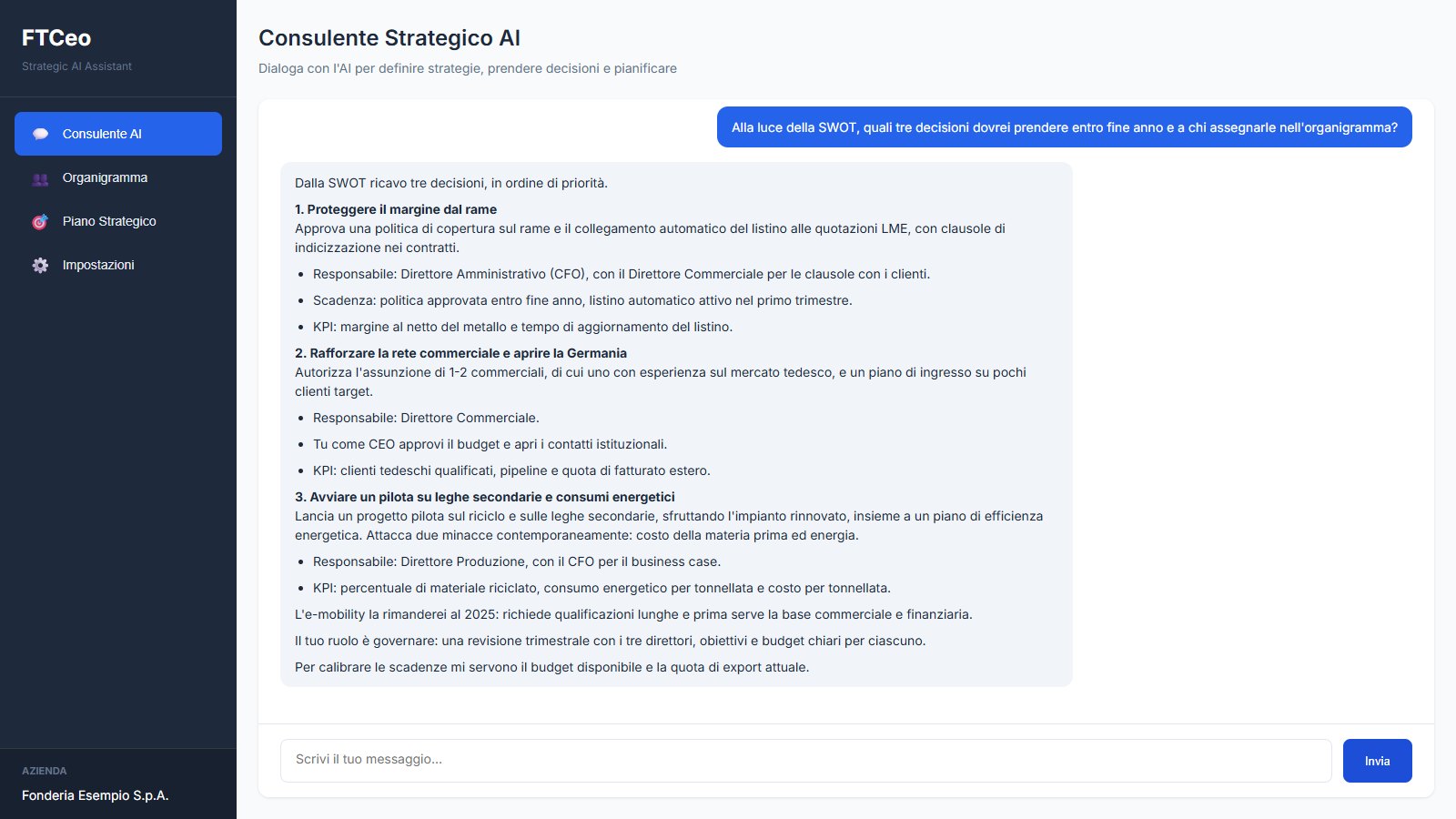
Screenshots from a demonstration environment with invented data: the companies, people and amounts are not real.
For the people in a company who have to decide: the CEO, the business owner, the purchasing or sales director. People who have little time, a lot of scattered information and nobody to ask “tell me everything we know about this, now”.
FT CEO is a web application with three work areas.
The point that makes the difference: the assistant knows the organisation chart and the plan. Every question is read together with the company’s context, and with one click the whole strategic plan can be submitted to the AI for a critical analysis: consistency between objectives and resources, unassigned responsibilities, unattended risks.
The architecture does not depend on a single provider: the models from Anthropic and from OpenAI are interchangeable.
The more an adviser knows, the more useful it is. The direction of development for FT CEO is to combine three sources:
It is the clearest example of FT Mercati and FT Support coming together: on one side the data, on the other the use made of them. Asked “is it worth bringing forward next quarter’s copper purchases?”, the assistant puts on the table the company’s consumption and contracts, the price trend, stocks and the macroeconomic picture. Then the person who has to decide, decides.
Every senior management team has its own questions. A custom version is built like this:
Data persistence, per-user access and security are designed together with the company, in the cloud or on its own servers.
Would you like to see the prototype and understand what it could become in your company? Write to us or call us.
Frequently asked questions
It is an AI assistant for CEOs, business owners and senior management. It brings together the structure of the company, the strategic plan and a conversation with an AI adviser that knows both, so the advice starts from the real situation and not from generic answers.
A generic assistant knows nothing about your company. FT CEO starts from the context: who does what, which objectives have been set, which strengths and weaknesses have been identified. The custom version adds documents, ERP data and market data.
Today it is a working prototype that we use to show the approach and to build custom versions. It is not an off-the-shelf product: every senior management team has different sources, indicators and questions, and the assistant has to be built on those.
In the custom version it can read the data distributed by FT Mercati: LME prices, Milan Indexes, scrap prices, exchange rates and fundamental data from official sources. They are the same data that more than a thousand companies use every day to buy and sell commodities.
The CRM we use every day at FT Mercati: an assistant that carries out operations, plain-language filters, AI checks on quotes and contracts.
The program we issue our e-invoices with: AI reads orders, CIG codes and declarations of intent from the notes, and a person confirms every invoice.
FT News: five AI agents find, write, review, approve and translate news on metals and commodities for FT Mercati's archive.
The engine that makes FT Mercati's PDF reports: charts and tables from the databases, the model's text on the data, a guardrail that stops what is wrong.
The CRM's Trade Fairs module: from any online exhibitor list to the visit, with an AI agent that collects, screens and matches against customer records.
FT Rottami: seven ML.NET algorithms read the merchants' contributions and determine each week the changes in the prices recorded at the scrap yards.
An AI assistant that knows the whole project interviews the customer: it gathers requirements, explains the version under test, records the observations.
The FT Mercati platform that changes the way commodity data is used: questions in plain language, answers with numbers, comparisons and charts.
Tell us about it in a first conversation, with no obligation: together we work out whether and where AI brings a measurable benefit, and which step to start with.