E-invoicing with AI reading of customer notes
The program we issue our e-invoices with: AI reads orders, CIG codes and declarations of intent from the notes, and a person confirms every invoice.
Case study
The CRM we use every day at FT Mercati: an assistant that carries out operations, plain-language filters, AI checks on quotes and contracts.
In brief
This is the CRM FT Mercati uses every day to manage customers, quotes, contracts and invoicing. We custom-built it and put AI where it saves time: an assistant that knows the CRM and can carry out operations, filters written in plain language, intelligent checks on the data, automatic reading of orders in PDF. Every action the AI takes goes through rules, roles and confirmations.
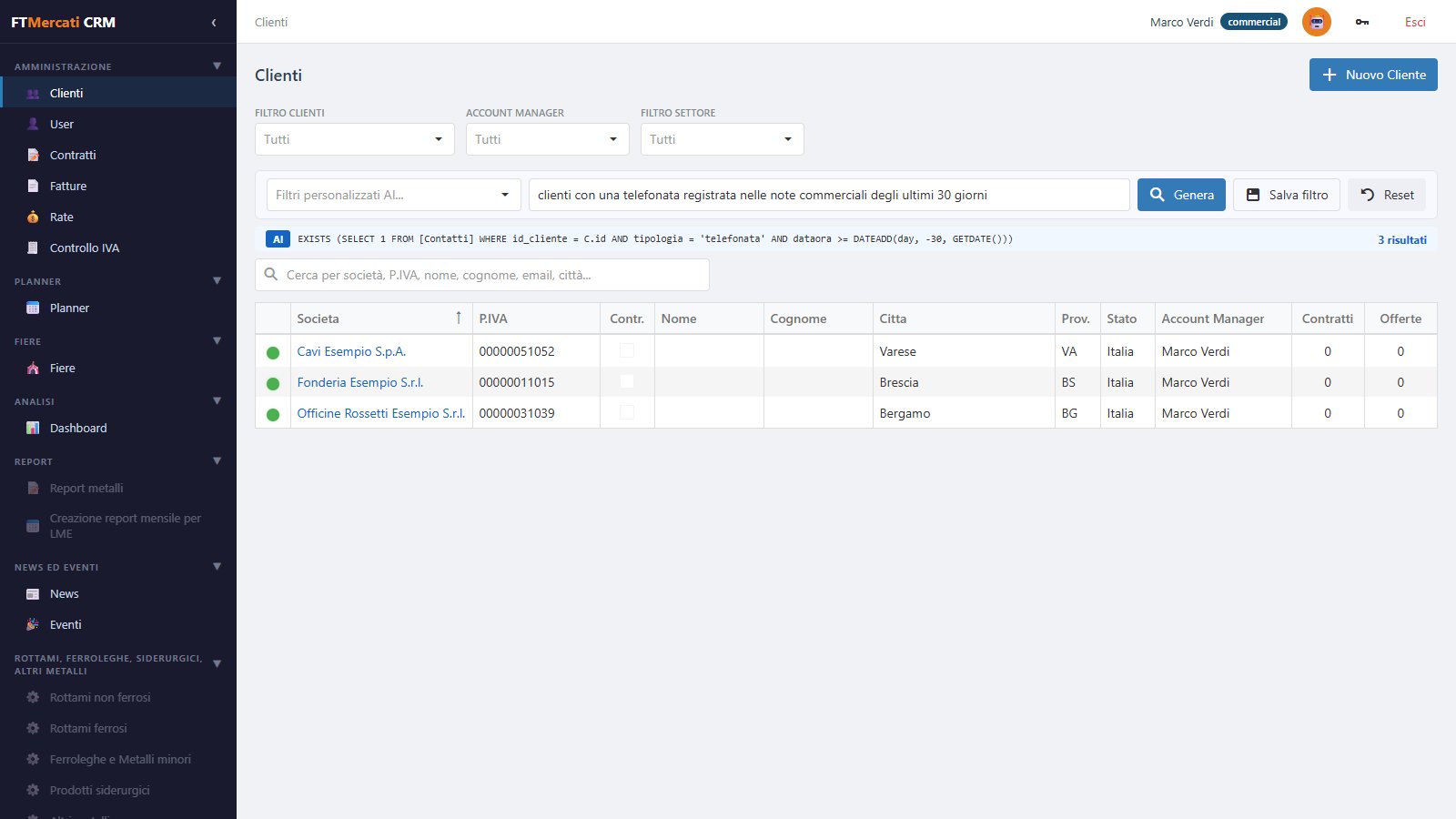
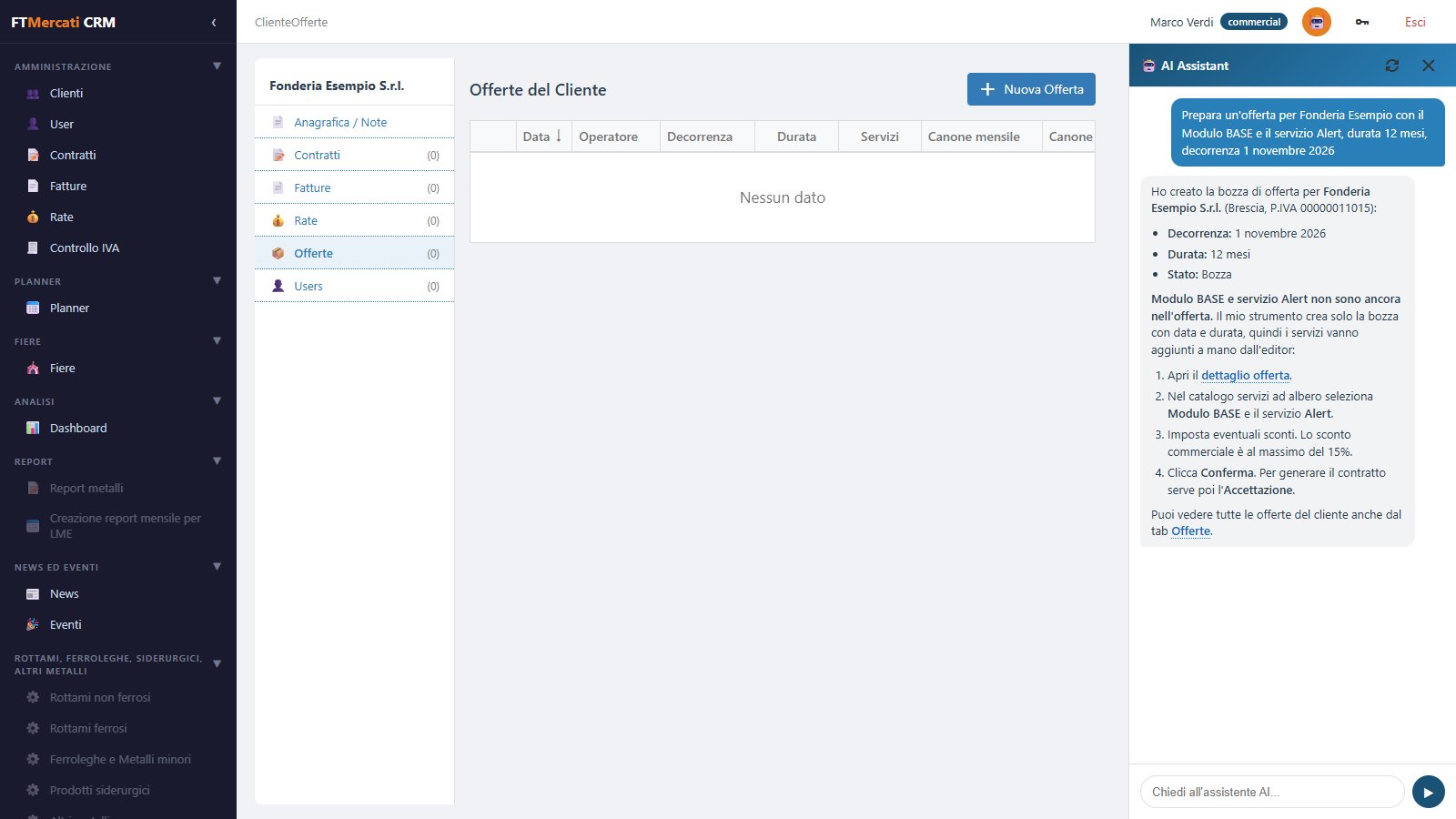
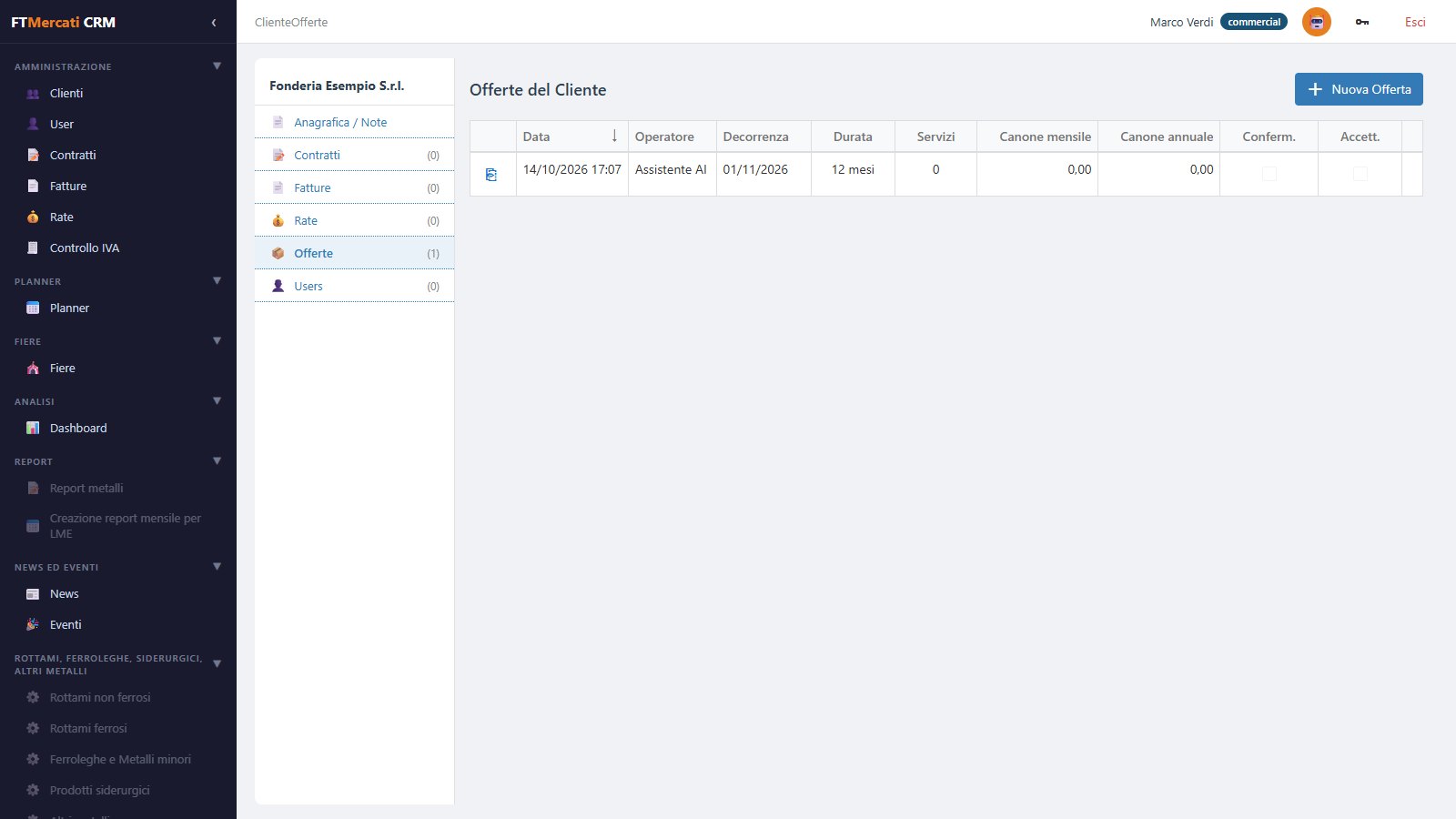
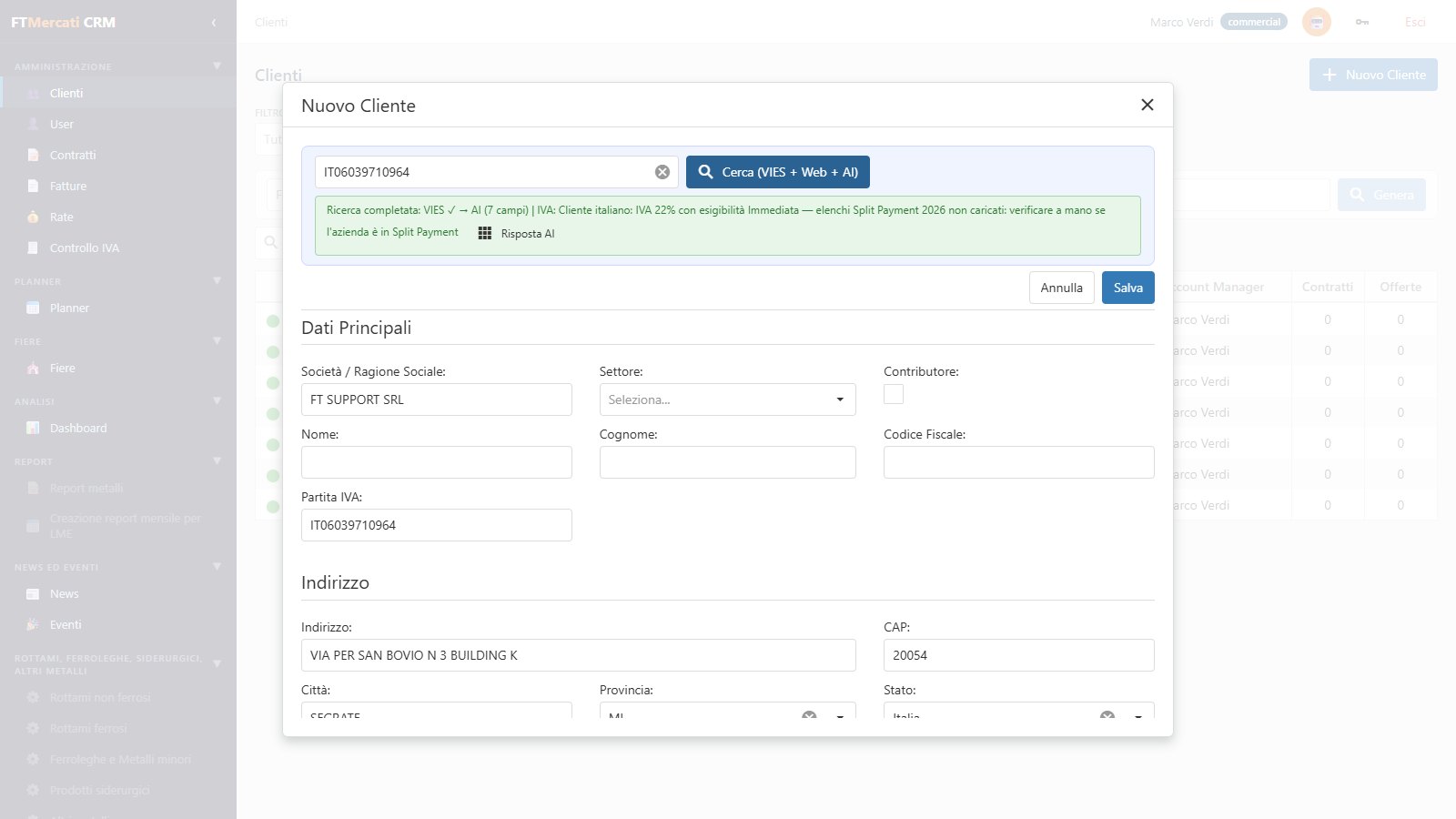
Screenshots from a demonstration environment with invented data: the companies, people and amounts are not real.
A company that sells information services by subscription has a sales cycle all of its own: free trials, quotes built from a catalogue with different levels of exchange licence, contracts with renewals and cancellations, instalments, portal user accounts to activate and deadlines to keep an eye on. No standard CRM covered it without workarounds and without Excel sheets kept alongside.
So we wrote our own. And while we were at it, we designed it so that artificial intelligence (AI) would work inside it, not next to it.
A complete CRM: customer records with tax checks, quotes with multilingual PDFs, contracts generated from accepted quotes, invoicing with instalments and payments received, portal user accounts with their services and expiry dates, a sales planner, and dashboards on revenue, contracts, and the sales team’s targets and bonuses.
On top of this, an AI assistant that is always available in a side panel and knows which screen you are on and which role you have.
We use different models for different tasks: a faster one for conversation, checks and translations, a more powerful one for analyses and complex filters.
This CRM is a real case, in production, used every day by the people who sell and the people who handle administration. It shows three things that hold true for any ERP, the company’s management software:
If you have an ERP or a CRM and would like a digital colleague working alongside it, let’s talk.
Frequently asked questions
It can find and summarise information on customers, quotes and contracts, build filters from a sentence in plain language, check that the data is consistent before it is saved, read documents such as purchase orders in PDF and prepare new records as drafts, which a person reviews and confirms.
No. Most of the tools are read-only. Those that write ask for explicit confirmation, create records as drafts and respect the user's role. The most sensitive operations, such as creating login credentials, stay with people: the agent takes the user to the right screen and stops there.
It was created for FT Mercati's sales cycle and is not an off-the-shelf product. It is, however, the foundation, in technology and in experience, that we start from when we build a custom CRM or ERP for another company.
Often, yes: if the CRM exposes APIs or an accessible database, the agent connects to those. The first thing to do is to choose one or two repetitive tasks on which to measure the result.
The program we issue our e-invoices with: AI reads orders, CIG codes and declarations of intent from the notes, and a person confirms every invoice.
FT News: five AI agents find, write, review, approve and translate news on metals and commodities for FT Mercati's archive.
The engine that makes FT Mercati's PDF reports: charts and tables from the databases, the model's text on the data, a guardrail that stops what is wrong.
The CRM's Trade Fairs module: from any online exhibitor list to the visit, with an AI agent that collects, screens and matches against customer records.
FT Rottami: seven ML.NET algorithms read the merchants' contributions and determine each week the changes in the prices recorded at the scrap yards.
An AI assistant that knows the whole project interviews the customer: it gathers requirements, explains the version under test, records the observations.
An AI adviser for senior management: it reasons on the organisation chart, strategic plan and company know-how, alongside FT Mercati market data.
The FT Mercati platform that changes the way commodity data is used: questions in plain language, answers with numbers, comparisons and charts.
Tell us about it in a first conversation, with no obligation: together we work out whether and where AI brings a measurable benefit, and which step to start with.